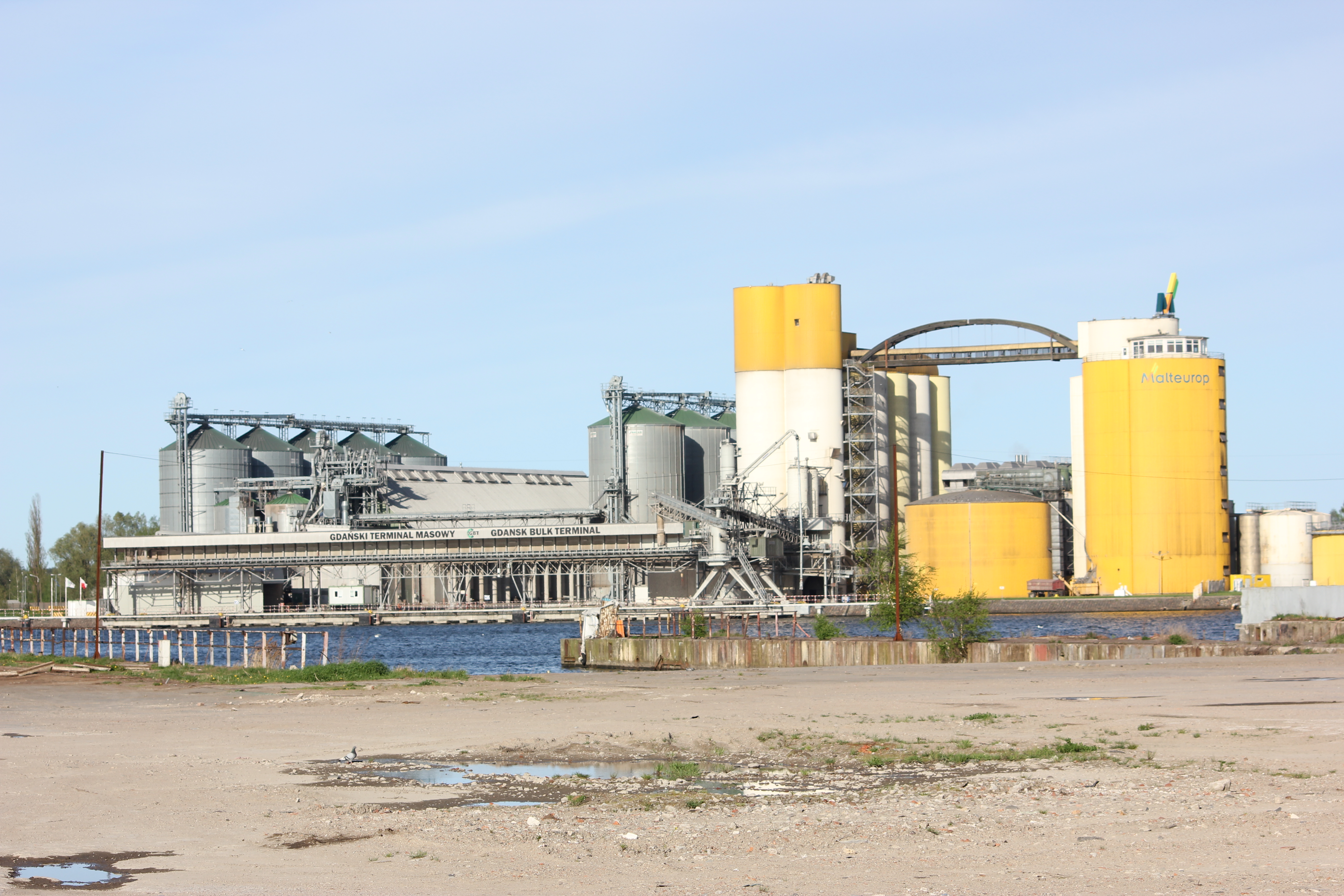
Port of Gdańsk
The Port of Gdańsk, managed by the Port of Gdańsk Authority (Zarząd Morskiego Portu Gdańsk SA), is one of the largest ports on the Baltic Sea. It is divided into the Inner Port (Port Wewnętrzny) and the Outer Port (Port Zewnętrzny, also called the Deepwater Container Terminal area). The Deepwater Container Terminal (DCT Gdańsk) at the outer harbour is the largest container terminal on the Baltic, capable of handling the largest container vessels currently operating in the region.
Container Handling
DCT Gdańsk operates two berths capable of serving vessels with a draught up to 16.5 metres and overall lengths beyond 400 metres. The terminal has been expanded progressively and offers direct feeder connections to ports throughout the Baltic. For cargo operators, the terminal provides standard intermodal transfer to rail and road, with a dedicated rail yard operating regular block trains to Polish inland destinations including Warsaw, Łódź, and Silesia.
Bulk and General Cargo Terminals
The Inner Port houses a range of specialized terminals. The Gdańsk Bulk Terminal (GBT) at the Bytomskie Wharf handles coal, coke, and other solid bulk commodities, with storage capacity and mechanical transfer equipment sized for Panamax-class bulk carriers. Nearby, the Naftoport fuel terminal handles crude oil and refined products, connected by pipeline to the Gdańsk refinery (Lotos/Orlen) and to the PERN pipeline system serving Central Europe.
| Terminal | Cargo Type | Key Access |
|---|---|---|
| DCT Gdańsk (T1/T2) | Containers | Rail, road |
| Gdańsk Bulk Terminal | Coal, coke, bulk | Rail, conveyor |
| Naftoport | Crude oil, products | Pipeline, tanker |
| Baltic Hub | Containers (feeder) | Rail, road |
| BCT Gdynia (adjacent port) | Containers | Rail, road |
Port of Szczecin-Świnoujście
The Szczecin-Świnoujście port complex is managed by the Szczecin and Świnoujście Seaports Authority (Zarząd Morskich Portów Szczecin i Świnoujście SA). The two ports function as a single administrative unit despite being approximately 65 km apart. Świnoujście handles ferry traffic (principally to Scandinavia, operated by Stena Line and Polferries) and a significant portion of LNG imports at the Polskie LNG terminal. Szczecin handles general cargo, bulk materials, Ro-Ro, and river-to-sea transshipment.
Szczecin: The River–Sea Interface
The Port of Szczecin is uniquely positioned as a river port that is also accessible to seagoing vessels. The Świna River, connecting Szczecin to the Oder estuary and the Baltic, has been dredged to maintain a minimum depth of approximately 12.5 metres, allowing medium-sized seagoing vessels to reach the city's port quays. This allows Szczecin to serve as a direct transshipment point between Oder barges and coastal/short-sea vessels, without the intermediate handling costs typical of a purely inland port.

River Barge Integration
The Oder's navigability on its lower section (Class Va between Szczecin and the German border) makes it practicable for regular barge operations to and from the port. Bulk commodities — particularly coal from Czech and Polish mines, and agricultural products from the Oder basin — have historically moved by barge to Szczecin for seaward export. Barge traffic also carries imports inland: fertilizers, mineral salts, and construction aggregates distributed to riverside warehouses and quarries along the Oder corridor.
Ro-Ro and Short-Sea Traffic
Szczecin's Ro-Ro berths handle unitized cargo including agricultural machinery, vehicles, and project cargo. Short-sea connections link the port to Scandinavian and German Baltic ports. The Morski Terminal Masowy Świnoujście (MTMS) handles coal imports for power generation, primarily at the Dolna Odra power plant and for distribution to other heat-and-power facilities in western Poland.
Rail Connections and Intermodal Logistics
Both Gdańsk and Szczecin are integrated into the Polish main rail network (PKP PLK). Rail connections at Gdańsk include direct links to the PKP Cargo network and dedicated freight lines servicing DCT. At Szczecin, rail access to the port quays allows direct wagon loading from bulk unloading equipment. The Polish Rail Freight Corridor (RFC) system, aligned with EU Regulation 913/2010, includes routes through both ports, enabling coordinated capacity allocation for international freight trains.
Port Governance and Regulatory Framework
Polish seaports are governed under the Act on Sea Ports and Harbours (Ustawa o portach i przystaniach morskich). Port Authorities hold concessions for port land and regulate terminal operator access. The Maritime Office (Urząd Morski) in Gdynia and Szczecin respectively administers maritime safety, hydrographic surveys, and vessel traffic services (VTS). Cargo operators must comply with both port regulations and Polish customs law, with clearance procedures handled through the OSOZ2 electronic customs system administered by the Polish Customs Service (Krajowa Administracja Skarbowa).